The Science of the Stride: Evidence-Based Benefits
A passion for power walking is more than a simple hobby; it represents a commitment to personal well-being, a pursuit of mental clarity, and a deep appreciation for the outdoors. This guide explores the extensive scientific evidence that supports power walking as a powerful tool for healthy aging. While running and jogging have long held the spotlight as popular forms of exercise, research shows that power walking provides many of the same profound benefits, all while being a low-impact activity that is gentle on the body.
Imagine a winding path through a sun-dappled forest, each step on the trail a quiet declaration of vitality. This guide will navigate the science behind that journey, translating complex research into actionable insights for maintaining a stronger body and a sharper mind. From the foundational aspects of heart health and bone density to the intricate connections between movement and cognitive function, the analysis reveals that a brisk walk is one of the most effective and accessible investments an individual can make in their future.
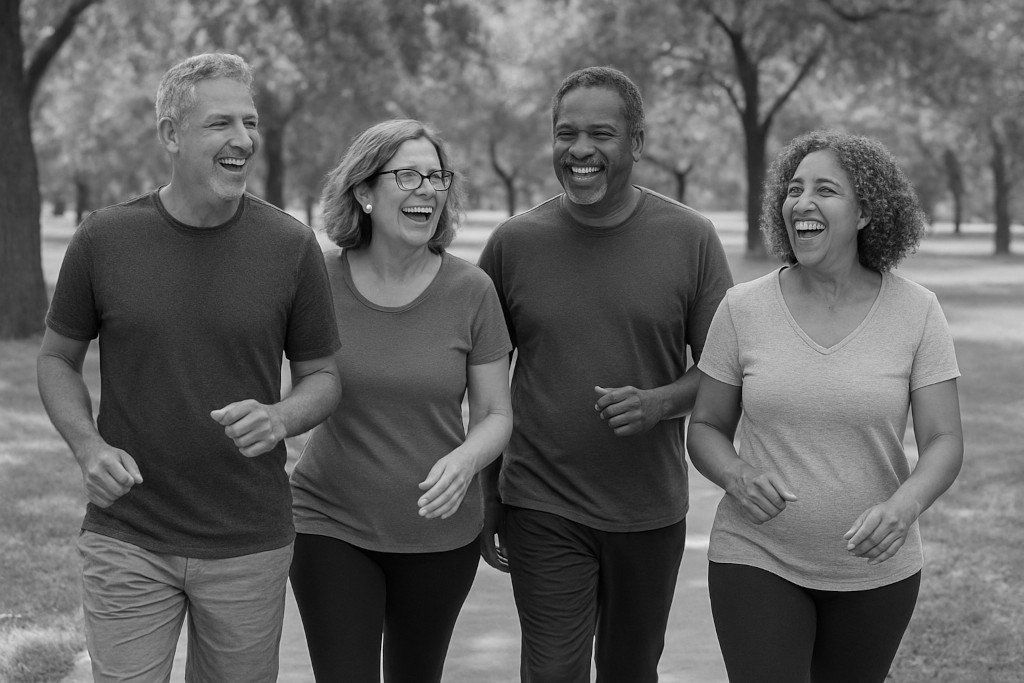
Revitalizing Your Body: Physical Health Benefits
A Stronger Heart, A Longer Life
For individuals seeking to improve their cardiovascular health, brisk walking provides a formidable alternative to more strenuous activities. The evidence is abundant, demonstrating that a vigorous walking pace can yield the same benefits as running in lowering blood pressure, cholesterol, and the risk of diabetes, provided a comparable amount of energy is expended. This concept of energy equivalence is critical. A person does not need to run to achieve a high-intensity workout. For example, walking at a slower pace of 2 miles per hour on an incline, such as a hill or a treadmill with a 3.5% grade, requires the same energy cost as a faster, more challenging pace on a flat surface. This empowers individuals who may have joint concerns to still pursue the profound cardiovascular benefits by simply modifying their route to include inclines rather than pushing for greater speed.
Beyond its effectiveness, walking is also supported by a wealth of data linking it to a longer, healthier life. A 2018 study published in the British Journal of Sports Medicine found that brisk walking reduced the overall risk of dying by 24% during the study period. Similarly, a meta-analysis of studies on walking pace and health outcomes found that a pace above 3 miles per hour was the most protective speed for the heart. The evidence is so compelling that the American Heart Association supports walking as a key way to reduce risk factors for cardiovascular disease, decrease body fat, lower blood sugar levels, and modestly improve lipid profiles. The federal physical activity guidelines recommend at least 150 minutes of moderate aerobic activity per week, and brisk walking is an excellent way to meet that goal. This amount can be achieved by walking for just 30 minutes a day, five days a week. Even small amounts of activity are beneficial, as one study found that just 15 minutes of light exercise each day could reduce the risk of dying from any cause by 14%.
Building Resilient Bones and Joints
Walking is a powerful form of weight-bearing exercise, which is essential for building and maintaining bone density and preventing osteoporosis. For a walk to be truly beneficial for bone health, the pace is a determining factor. Research indicates that a minimum speed of 2.5 miles per hour is needed, with an ideal pace for bone strengthening being between 3.1 and 3.7 miles per hour. This speed creates forces on the hip bones that are similar to those generated by running or hopping, providing the necessary stimulus for bone growth. This makes brisk walking a uniquely safe and effective choice for individuals with fragile bones who may not be able to tolerate the impact of higher-intensity activities.
However, the benefits of walking for musculoskeletal health are not limited to bones. For those with joint concerns, especially knee osteoarthritis, walking is considered "good medicine". It strengthens the muscles that support joints, which in turn reduces the pressure placed on them and alleviates pain. Regular walking also compresses and releases the cartilage in the knees, which helps circulate synovial fluid—a vital substance that nourishes and lubricates the joints.
Maintaining a Healthy Body and Mind
Beyond the circulatory and skeletal systems, brisk walking contributes to overall physical endurance and vitality. It is an effective tool for maintaining a healthy weight and losing body fat. The intensity of a walk directly correlates to the number of calories burned, and techniques such as incorporating inclines or interval walking can significantly boost this effect. A walk that includes hills or stairs engages more muscles, particularly those in the legs and glutes, compared to walking on flat terrain. For middle- and upper-aged individuals, this is especially beneficial, as it can help maintain muscle endurance and improve balance and coordination, which are key factors in preventing falls.
Sharpening Your Mind: Cognitive and Emotional Benefits
Walking for a Happier Mind
The connection between physical activity and mental health is well-documented, and walking stands out as a simple yet powerful antidote to the pressures of daily life. It is highly effective at reducing feelings of stress, anxiety, and depression. The physiological mechanism is a release of "feel-good" chemicals in the brain, such as endorphins and serotonin, which naturally elevate mood and reduce tension. Simultaneously, exercise lowers levels of stress hormones like cortisol and adrenaline. Research indicates that the mental health benefits of walking are apparent even with a minimal investment of time; just five minutes of aerobic exercise can begin to produce anti-anxiety effects, and a 10-minute walk can provide hours of relief from a depressed mood. Furthermore, a study on step counts and depression found that taking as few as 1,000 steps per day correlated to a 10% decrease in depressive symptoms, with a peak effect among those who took more than 7,500 steps, who were 42% less likely to experience depression.
Powering Your Brain
Walking has a profound impact on cognitive function, including memory, focus, and decision-making abilities. Recent research adds to a growing body of evidence that regular walking may help to stave off cognitive decline and reduce the risk of dementia by as much as 50%. A notable study on sedentary adults aged 71 to 85, some with mild cognitive impairment, found that after just 12 weeks of a walking program, participants showed significant improvements in memory. Brain scans revealed stronger and more synchronized nerve cell connections, a clear indication that exercise can induce the brain's ability to change and adapt, even later in life.
The benefits for the brain are multi-faceted and extend beyond the physiological. While walking directly supports nerve cell growth by triggering the expression of a protein called brain-derived neurotrophic factor (BDNF), it also indirectly helps by lowering the risk of conditions like heart disease and type 2 diabetes, which are risk factors for Alzheimer's disease. A synergistic effect is created when walking is combined with social interaction. While the combination has not been formally studied to prevent dementia, physicians suggest it could be a powerful combination for brain health. The social engagement that comes with walking with a friend or in a group is a cognitive exercise in itself, and this dual approach—combining physical movement with social connection—provides a holistic strategy for cognitive wellness. A study on daily step count found that approximately 9,800 steps per day may be optimal for reducing the risk of dementia, with a minimum dose of 3,800 steps still resulting in a 25% lower risk.
From Stroll to Stride: Mastering Your Power Walk
Essential Preparations for Your Walk
Before beginning any new exercise routine, especially after a period of inactivity or if a person has existing health conditions, it is important to consult with a doctor or allied health professional. This essential first step ensures the individual can safely embark on their walking journey. Once cleared, the most effective way to start is to set realistic, achievable goals. Experts recommend beginning with just 5 to 10 minutes a day and gradually building up over time to reach the recommended 30 minutes of daily activity. This incremental approach makes the routine sustainable and helps prevent burnout.
The right gear is simple but important. The primary piece of equipment needed is a comfortable and supportive pair of shoes. When purchasing new footwear, it is advisable to shop later in the day when feet are naturally a bit larger and to measure both feet, as their size can change with age. For individuals who use walking aids like a cane or a walker, it is important to continue to use them, as these can improve balance and lighten the load on joints, making movement easier and safer.
The Art and Science of Proper Technique
The foundation of an effective power walk is proper posture. The correct form is not merely about appearance; it is an integrated technique that maximizes benefits and minimizes the risk of injury. A person should stand up straight and tall, as if a rope were lifting them upward from the spine. The head should be up, with the gaze directed forward and not at the ground. The shoulders and neck should be relaxed, not stiffly hunched. Gently pulling in the abdominal muscles engages the core, providing stability for the entire body.
The movement of the arms is also crucial. The elbows should be bent at a 90-degree angle, with hands held in a loose fist. Keeping the arms on their own side of the body, rather than crossing the midline, helps to create a shorter, more rapid pendulum swing that drives a quicker turnover of the feet. This efficient arm swing is interconnected with the ability to maintain the brisk pace needed for cardiovascular and bone benefits. Simultaneously, correct posture—with the head up and chest open—allows for more efficient breathing, providing the necessary oxygen to fuel the body and sustain a vigorous pace. The coordinated movement of the arms and the upright posture work in concert to make the power walk a highly effective form of exercise. Finally, with each step, the heel should strike the ground first, before the ball of the foot or toes, a key element of the walking stride that propels a person forward.
Once a person has mastered the basics, there are simple, science-backed ways to upgrade their routine for even greater benefits:
- Interval Walking: A technique often referred to as "Japanese interval walking," this involves alternating between periods of high-intensity and low-intensity walking. For example, a person can walk briskly for three minutes at a pace where talking is possible but challenging, followed by three minutes of a comfortable, recovery pace. Repeating this cycle for 30 minutes can significantly improve fitness levels, burn more calories, and improve blood sugar control.
- Walking with Inclines: Incorporating hills or stairs into a route is a simple way to engage more muscles, particularly those in the legs and glutes. This increases the intensity of the workout and helps burn more calories without the need for additional speed. As previously noted, walking uphill can achieve the same cardiovascular benefits as a faster pace on flat ground, making it a valuable tool for personalized fitness.
The Long Game: Staying Motivated
The journey to better health does not need to be a solitary one. Walking with a friend, a loved one, or a pet provides a host of mutual benefits. Having a walking buddy provides accountability, making it much harder to skip a planned walk. It also makes the exercise more fun and serves as a powerful opportunity to build friendships and deepen existing relationships, which has its own social and cognitive benefits.
Consistency is the key to a sustainable routine. One of the most effective ways to stay motivated is to track progress with a fitness tracker or a simple log. Seeing how many steps a person has taken or how far they have walked can be a powerful source of inspiration and a tangible measure of their accomplishments. Varying a routine by exploring new routes, listening to a podcast or music, or simply enjoying the scenery can also prevent boredom. Finally, it is important to be patient and flexible. If a day is missed, a person should not give up. Simply remind oneself of the good feelings that come from a walk and get back on track. For bad weather days, having a "Plan B," such as walking at a local mall or an indoor track, ensures the routine is not interrupted. The most important thing is that any activity is better than none at all.
Scientific References
- Williams, P.T. (2013). Walking vs. running for blood pressure, cholesterol, and diabetes mellitus risk reduction. Arteriosclerosis, Thrombosis, and Vascular Biology.
- Sprott, S. (2018). The effect of step count on all-cause mortality. British Journal of Sports Medicine.
- American Heart Association. (2022). Getting Started: A Walking Plan.
- National Center for Chronic Disease Prevention and Health Promotion. (2022). Physical Activity Guidelines for Americans.
- Centers for Disease Control and Prevention. (2022). How Much Physical Activity Do Adults Need?
- National Osteoporosis Foundation. (2021). Exercise for Strong Bones.
- Bolster, M.B. et al. (2020). The Relationship Between Walking Pace and Bone Density. Journal of Bone and Mineral Research.
- Arthritis Foundation. (2023). 12 Benefits of Walking.
- NYU Langone Health. (2022). New Research Offers Hope for Knee Osteoarthritis.
- Harvard Medical School. (2023). Walking for Exercise.
- Living Streets. (2023). Older adults enjoy the benefits of walking.
- Kravitz, L. (2021). The Scientific Benefits of Interval Walking. IDEA Health & Fitness Association.
- National Institute on Aging. (2022). Exercise and Physical Activity.
- Healthline. (2023). Walking vs. Running: Which Is Better for Your Health?
- Mayo Clinic. (2022). Walking: Trim your waistline, improve your health.
- University of Illinois. (2023). Study Shows Walking Program Improves Memory in Older Adults.
- Villasenor, J. (2021). How Walking Improves Brain Health. Psychology Today.
- The Lancet. (2023). The association between daily step count and dementia risk.
- Journal of Clinical Outcomes Management. (2020). Physical Activity and Disability in Older Adults.
- American Academy of Orthopaedic Surgeons. (2022). Choosing the Right Shoes for Walking.
- Cleveland Clinic. (2023). Proper Walking Technique.
- MedlinePlus. (2022). Staying Motivated to Exercise.