The Role of Artificial Intelligence in Medical Imaging and Radiology
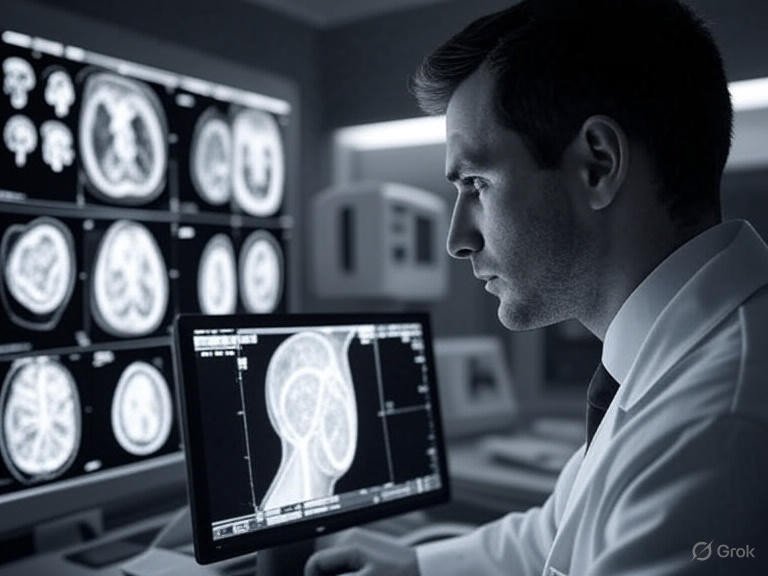
Radiology, a cornerstone of modern medicine, has long relied on the human eye to interpret complex medical images. From X-rays to MRI scans, radiologists tirelessly search for subtle signs of disease. The advent of Artificial Intelligence (AI) is now fundamentally transforming this field, offering powerful tools that enhance diagnostic precision, increase efficiency, and promise a future of more personalized patient care.
Enhancing Diagnostic Accuracy and Speed
One of the most profound impacts of AI in radiology is its ability to serve as a powerful second opinion. AI algorithms, particularly those based on deep learning, are trained on massive datasets of medical images to identify patterns that may be difficult for the human eye to detect. A prime example is the detection of breast cancer from mammograms. While mammography is the primary screening method, a significant number of cancers can be missed. AI-enabled systems have been shown to accurately analyze mammograms, assisting radiologists in identifying potential malignancies. This partnership not only increases accuracy but can also reduce the time it takes to provide a diagnosis, leading to faster treatment for patients.
Similarly, AI is being applied to chest X-rays to quickly detect findings like pneumothorax or lung nodules, and to CT scans to identify early signs of conditions like pneumonia. These tools can automatically highlight areas of concern, acting as a triage system that prioritizes critical cases for immediate review by a human radiologist, thereby streamlining the entire workflow.
Beyond Diagnosis: Image Quality and Workflow Efficiency
The role of AI extends far beyond simple detection. In the realm of image reconstruction, AI algorithms can generate high-quality images from lower-quality or incomplete data. This is particularly valuable in modalities like MRI, where long scan times can be uncomfortable for patients. AI-based reconstruction can produce diagnostic-quality images from shorter, under-sampled scans, allowing for a faster and more comfortable patient experience. This technology also has the potential to reduce radiation exposure in CT scans by using AI to enhance images acquired at a lower dose, a significant benefit for patient safety.
Furthermore, AI can automate time-consuming, administrative tasks that burden a radiologist's day. These include image segmentation (delineating a specific organ or tumor), generating priority lists for urgent cases, and even assisting with preliminary reports. By handling these routine tasks, AI frees up radiologists to focus on more complex, value-added activities, such as interpreting challenging cases, collaborating with other clinicians, and communicating with patients.
The Human-AI Partnership: The Future of Radiology
The conversation around AI in radiology has evolved from a debate about "human vs. machine" to a focus on augmented intelligence. Experts widely agree that AI will not replace radiologists but will instead serve as an essential assistant that amplifies their capabilities. The future of the field lies in a collaborative model where the radiologist's nuanced clinical reasoning and contextual understanding are combined with the AI's ability to process massive datasets and identify intricate patterns. This synergy will lead to more accurate, consistent, and confident diagnoses.
In this new paradigm, radiologists will become even more integral to patient care. With AI managing the heavy lifting of image analysis, radiologists can dedicate more time to complex cases, treatment planning, and direct consultation with referring physicians. This shift will elevate their role, making them a more visible and proactive part of the patient care team.
Challenges and Ethical Considerations
While the potential of AI is vast, its successful integration is not without challenges. One major concern is algorithmic bias, which can occur if the AI model is trained on unrepresentative or non-diverse datasets. This can lead to inaccurate diagnoses for certain populations. Additionally, the "black box" nature of some deep learning models, where their decision-making process is not easily understood, raises questions about transparency and accountability.
Other key issues include data privacy (ensuring patient data used for training is properly anonymized and secure), regulatory approval (getting AI tools cleared by health authorities), and defining legal liability in the event of an AI-related diagnostic error. Addressing these challenges through robust governance, ethical frameworks, and transparent development is crucial for building trust and ensuring the equitable and safe deployment of AI in clinical practice.
References
- Oladele, O.K. (2024). AI-Powered Medical Imaging: A Comprehensive Review of Applications, Benefits, and Challenges. ResearchGate.
- Srinivasan, R., et al. (2023). Redefining Radiology: A Review of Artificial Intelligence Integration in Medical Imaging. PMC - PubMed Central.
- European Society of Radiology. (2022). Artificial Intelligence in Radiology: Impact on the Radiography Profession. PMC - PubMed Central.
- Reese, E. (2025). Top 6 Radiology AI Use Cases for Improved Diagnostics. Research AIMultiple.
- GE Healthcare. (2023). Deep-learning imaging reconstruction: Improving IQ and patient outcomes in radiology. Retrieved from gehealthcare.co.uk.
- Qin, C., et al. (2022). Artificial Intelligence-Based Image Reconstruction in Cardiac Magnetic Resonance. arXiv.
- Lakhani, P. (2022). Ethics of AI in Radiology: A Review of Ethical and Societal Implications. Frontiers.
- Vlaar, A.P., et al. (2021). Governing Artificial Intelligence in Radiology: A Systematic Review. MDPI.